
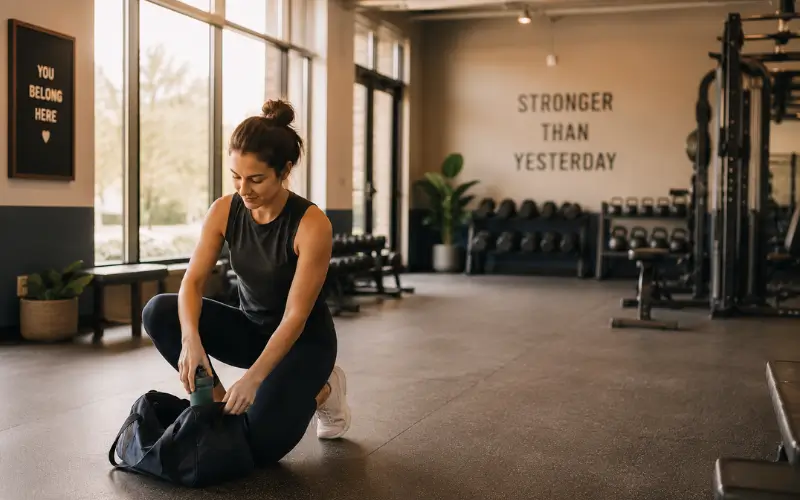
Exercise is meant to relieve stress and anxiety but for a lot of people, the gym itself is what triggers it. The bright lights, the mirrors, the sound of weights dropping, the sense that everyone else knows exactly what they are doing while you are still figuring out how to adjust the seat on a machine. That mix of nerves, self-consciousness and outright dread has a name: gym anxiety.
If you have ever cancelled a gym session because the thought of walking in felt worse than the workout itself, you are not alone. Gym anxiety is common, it is well documented, and it is entirely manageable once you understand where it comes from and what actually helps.
Table of Contents
Key Takeaways
- Gym anxiety is a real and common experience, not a sign of weakness or a lack of discipline.
- It shows up as physical symptoms (racing heart, tense muscles, shortness of breath) as well as emotional ones (worry, fear, self-doubt).
- Triggers range from practical unfamiliarity, such as not knowing how equipment works, to deeper psychological factors like fear of judgement and body image concerns.
- Small, consistent steps, from choosing off-peak hours to bringing a friend, make a measurable difference over time.
- Confidence at the gym is built gradually. It comes from repeated exposure and small wins, not from arriving as an expert.
What Is Gym Anxiety
Gym anxiety describes the nervousness, self-consciousness or fear that some people experience before or during time spent at a gym. It is sometimes called gymtimidation, a term that captures the specific blend of intimidation and avoidance that comes from feeling out of place in a gym environment.
Gymtimidation often centres on the fear of being watched or judged while exercising. Someone might avoid a certain machine because they are not sure how to use it, skip the free weights section entirely, or stick to a corner of the gym where they feel less visible. It is less about fitness ability and more about the social discomfort of being seen while learning.
Gym anxiety is not officially classified as its own diagnosis. It sits closer to performance anxiety and social anxiety, both of which are recognised patterns where a person feels excessive worry about being observed or evaluated by others. For many people, gym anxiety is temporary and tied to specific situations, like starting at a new gym or returning after a long break. For others, it can be a more persistent barrier that keeps them from exercising at all.
How Common Is Gym Anxiety
Studies have shown that gym anxiety is far more common than most people assume, largely because it tends to be a private experience. Someone sitting in the car park working up the nerve to go inside rarely mentions it to anyone. However, surveys on the topic consistently find that a significant portion of gym members and non-members alike report feeling anxious, self-conscious or intimidated by the idea of exercising in front of others.
Beginners report it most often, but it is not limited to people who are new to fitness. Experienced gym-goers can feel it too, particularly when trying an unfamiliar type of training, joining a new gym, or returning after time off due to injury, illness or a long break. The common thread is not fitness level. It is the feeling of being watched or evaluated while doing something that feels vulnerable.
Signs and Symptoms of Gym Anxiety
Gym anxiety shows up differently for different people, but it tends to fall into two categories: physical symptoms and emotional ones. Recognising these signs is the first step toward addressing them, since many people experience the symptoms without realising anxiety is the cause.
Common signs and symptoms include:
- Rapid heart rate: a noticeable increase in heart rate before or during a gym visit, even before any physical exertion has started.
- Muscle tension: tightness in the shoulders, jaw or neck, often linked to the stress response rather than the workout itself.
- Fearful feelings: a sense of dread or apprehension when thinking about going to the gym, sometimes strong enough to lead to avoidance.
- Excessive worry: repeated, intrusive thoughts about being watched, judged or doing something wrong in front of others.
- Chest tightness: a feeling of pressure or constriction in the chest, separate from the physical demands of exercise.
- Shortness of breath: breathing that feels shallow or laboured, particularly before starting a workout rather than during it.
If several of these show up consistently before gym visits, it is a strong signal that anxiety, rather than fitness level or motivation, is the real barrier.
Why Gym Anxiety Happens
Gym anxiety follows the same physiological pathway as other forms of social anxiety, driven by what researchers call fear of negative evaluation. The brain does not clearly distinguish between physical threat and reputational threat. Being watched while learning a new movement or struggling with a weight gets processed by the amygdala in much the same way as being watched while making a mistake in front of a group, because both carry the risk of judgement. That perceived threat triggers the sympathetic nervous system, releasing adrenaline and cortisol, the same fight-or-flight response that would fire in the presence of physical danger. This is what produces the racing heart, muscle tension and shortness of breath covered earlier, even though nothing physically dangerous is happening.
Anxiety also pulls attention inward, toward how a person imagines they look or sound to others, rather than outward toward the task itself. This is why someone can lose track of their own form or forget simple steps in a routine when anxious, the cognitive resources that would normally go toward the movement are instead going toward monitoring perceived judgement.
Common Triggers of Gym Anxiety
Some triggers are practical and tied to unfamiliarity with the environment. Others are psychological, rooted in how a person perceives themselves in relation to others. Most people experience a combination of both.
Common triggers include:
- Unfamiliarity: not knowing the layout of a gym, where equipment is kept, or how a facility generally operates.
- Being a beginner: starting from a lower fitness level while surrounded by people who appear more experienced.
- Changing rooms: discomfort with communal changing spaces, particularly around body image or privacy.
- Not understanding the equipment: uncertainty about how a machine works or what the correct form looks like.
- Trying new routines: stepping outside a familiar workout into unfamiliar territory, such as a new class or training style.
- Perceived competence: worrying that others will notice a lack of skill or experience.
- Perceived expectations: assuming there is an unspoken standard everyone else meets, and fearing falling short of it.
- Social comparison: measuring your own fitness level, strength or appearance against other gym members.
- Physical awareness: heightened self-consciousness about how your body looks or moves while exercising.
- Body image concerns: discomfort with mirrors, tight clothing or being seen in workout attire.
- Fear of judgement: the belief that others are watching and forming negative opinions.
- Intimidation: feeling small or out of place around more experienced or visibly fit members.
- Cultural stereotypes: internalised ideas about who “belongs” in a gym, often shaped by media or past experiences.
None of these triggers reflect a person’s actual ability or right to be in a gym. They are learned responses, often shaped by past experiences, media portrayals of fitness culture, or simply a lack of exposure to the environment. The good news is that learned responses can be unlearned with the right approach.
Practical Strategies to Overcome Gym Anxiety
Gym anxiety responds well to structure and gradual exposure. Rather than trying to eliminate the nerves entirely, the goal is to reduce the unknowns and build familiarity one step at a time. The table below breaks down 16 strategies, why each one helps, how to put it into practice, and a few expert tips to get more out of it.
| Strategy | Why It Helps | How to Apply It | Common Mistake to Avoid |
| Find the Right Gym | The right environment reduces friction before you even start. | Visit two or three gyms in person during the hours you would actually train, and watch how staff interact with people who look new. Check if they offer a walkthrough or trial session before signing a contract. | Choosing a gym based on price or location alone, without checking how it actually feels to walk in. |
| Educate Yourself | Understanding how a gym works removes a large source of uncertainty. | Watch two or three short tutorial videos on the specific machines or exercises you plan to use, then write down the names of the equipment so you can find it without asking. Look up basic gym etiquette, like how to re-rack weights. | Trying to learn everything at once. A handful of machines is enough to start. |
| Set Realistic Goals | Clear, achievable goals shift focus away from comparison and toward personal progress. | Pick one specific, measurable goal for the first month, such as attending twice a week, and write it somewhere visible like a phone note or calendar reminder. | Setting goals based on someone else’s pace or appearance. |
| Accept Your Nerves | Accepting anxiety as a normal reaction reduces its intensity over time. | Say the feeling out loud or write it down before a session, such as “I feel nervous about the free weights area.” Naming it specifically reduces its intensity more than a vague sense of dread. | Treating nervousness as a sign something is wrong or that you are not ready. |
| Create a Workout Plan | A plan removes on-the-spot decision-making, which is often where anxiety spikes. | Write out the exact exercises, sets, reps and order the night before, and save it as a note on your phone so there is nothing to decide once you are inside. | Arriving without a plan and trying to figure it out on the gym floor. |
| Dress for Confidence | Feeling comfortable in what you are wearing reduces self-consciousness. | Wear an outfit you have already worn before and know feels comfortable, and test it with light movement at home first if it is new. | Buying new workout clothes right before a first session and adding another unfamiliar variable. |
| Use Noise-Cancelling Headphones | Music creates a mental buffer that reduces awareness of surroundings. | Build a playlist the night before and download it for offline use, so there is no dead time fumbling with an app once you arrive. | Relying on headphones as the only coping strategy, rather than one tool among several. |
| Choose Off-Peak Hours | Fewer people around means fewer opportunities to feel watched. | Ask staff directly which hours are quietest, or check if the gym’s app shows live occupancy. Try a midweek midmorning slot as a starting point. | Assuming early morning is always quiet. Peak times vary by gym. |
| Start With the Basics | Building competence with simple movements first creates a stronger foundation of confidence. | Spend the first two weeks on bodyweight exercises and machines with guided movement paths, and only add free weights once the basic movements feel automatic. | Jumping straight into advanced routines seen online or used by more experienced members. |
| Bring a Friend | A familiar face reduces the feeling of being alone in an unfamiliar space. | Book the first three sessions together in advance and treat them as fixed appointments, not casual plans that can be cancelled. | Relying on a friend indefinitely instead of building independent comfort over time. |
| Try a Class | Group settings offer structure and reduce the pressure of figuring things out alone. | Look for a class specifically labelled “beginner” or “introductory,” and message the instructor beforehand to mention it is your first time. | Picking a class based on schedule alone without checking the difficulty level. |
| Seek Professional Guidance | A certified trainer provides direction and removes uncertainty about what to do. | Book a single introductory session focused only on form and equipment orientation, before committing to an ongoing package. | Assuming a trainer is only for advanced athletes or serious weight loss goals. |
| Practice Positive Thinking | Reframing anxious thoughts reduces their intensity and duration. | Write down one or two reframing phrases in advance, such as replacing “everyone is watching me” with “everyone here is focused on their own workout,” so it is ready before the anxious thought appears. | Waiting until mid-anxiety to try reframing, when it is harder to think clearly. |
| Focus on Your Journey | Shifting attention to personal progress reduces the pull of comparison. | Keep a simple log, on paper or in an app, of weights, reps or times, and review it every two weeks to see actual progress. | Comparing week-one performance to someone else’s months of training. |
| Celebrate Small Achievements | Recognising progress reinforces motivation and builds confidence gradually. | Set a specific small milestone, like completing a full week of sessions, and mark it deliberately, such as ticking it off a calendar. | Only counting large milestones and overlooking the smaller, more frequent wins. |
| Stay Consistent | Familiarity is one of the strongest tools against anxiety. | Schedule sessions at the same time each week for the first month, even if each one is short, to build a routine rather than relying on motivation. | Treating one missed session as a reason to stop the routine altogether. |
None of these strategies require perfection. Progress tends to come from applying two or three consistently rather than trying to adopt all sixteen at once.
Overcome Gym Anxiety With Austin Fitness
The first gym visit, or a return after time away, often comes with nerves, but having the right environment makes a measurable difference. A supportive setting, clear guidance and a team that understands what beginners need can turn a daunting first visit into a manageable, and even enjoyable one.
Here at Austin Fitness, we offer induction support, beginner-friendly sessions and trainers who understand the value of a welcoming first experience. The goal might be building confidence with equipment, easing into a new routine or simply having someone explain how things work, and support is available every step of the way.
No experience required, no assumptions made. Come as you are. Our team will handle the rest.
Frequently Asked Questions
Is gym anxiety normal?
Yes. Gym anxiety is a widely reported experience, particularly among beginners and people returning to exercise after time away. It reflects a natural response to an unfamiliar or evaluative environment rather than a personal shortcoming.
Is gym anxiety a real condition?
Gym anxiety is not classified as its own separate diagnosis, but it shares characteristics with recognised patterns like performance anxiety and social anxiety. For most people, it is a situational response rather than a clinical condition, though it can be significant enough to affect behaviour and avoidance.
Can gym anxiety be a form of social anxiety?
For some people, yes. Gym anxiety often stems from the same underlying fear of judgement or evaluation that drives social anxiety more broadly. It does not mean everyone who feels nervous at the gym has social anxiety, but the two can overlap.
Why do I feel anxious before going to the gym?
Anticipatory anxiety, the anxiety that builds before an event rather than during it, is common with gym anxiety. It often stems from anticipating discomfort, whether that is unfamiliarity with equipment, fear of judgement, or uncertainty about what the session will involve.
Why do I feel judged at the gym?
Feeling judged at the gym usually shows up in two forms. One is a general sense of being judged, the assumption that someone is watching and forming a critical opinion about your body, fitness level or appearance. The other is more specific, a fear of looking incompetent, using equipment the wrong way or fumbling through a movement in front of people who seem to already know what they are doing.
Both come down to perceived expectations. Most gym members stay focused on their own workout, yet the feeling of being watched, or of getting something wrong in front of others, can persist regardless.
Can gym anxiety cause physical symptoms?
Yes. Physical symptoms like a racing heart, muscle tension, chest tightness and shortness of breath are common with gym anxiety, since anxiety triggers the body’s stress response regardless of the actual physical exertion involved.
How can you treat gym anxiety?
Gradual exposure combined with practical preparation tends to be the most effective approach at treating gym anxiety. Strategies like creating a workout plan, choosing off-peak hours, starting with familiar exercises and seeking guidance from a trainer all reduce the uncertainty that fuels anxiety.
Does having a personal trainer help with gym anxiety?
For many people, yes. A trainer removes much of the guesswork around technique and routine, and provides a familiar point of contact in an otherwise unfamiliar environment. This structure often reduces anxiety significantly, particularly in the first few weeks.
How do I ask gym staff for help without feeling embarrassed?
Most gym staff expect and welcome questions from newer members, since helping people get comfortable is part of their role. Asking a specific, direct question, such as how to adjust a machine or where a particular piece of equipment is located, tends to feel far less daunting once the first question is out of the way.
How do you build confidence at the gym?
Confidence builds through repeated exposure and small, consistent wins rather than a single turning point. Sticking to a plan, tracking progress and returning regularly, even for short sessions, gradually replaces uncertainty with familiarity.
How long does it take to get comfortable at the gym?
This varies from person to person, but many people notice a meaningful shift within four to six weeks of consistent visits. Comfort tends to build gradually as the environment becomes familiar and routines start to feel automatic.
Does exercise help with anxiety long term?
Yes. Regular exercise is well established as a tool for reducing anxiety over time, even though the gym itself can be a source of anxiety in the short term. Once the initial discomfort eases, most people find that consistent training becomes a meaningful part of managing anxiety more broadly.
I have spent the last 35 years researching the best methods for losing weight and getting that lean and toned athletic look. I hold certifications in Personal Fitness Training and Performance Nutrition from the International Sports Science Association. Additionally I have completed the Reg Park Master Trainer Course and wrote the book “The Mc Donald’s Diet.” If you want to get into your best possible shape in the shortest possible time, then book a free trail now.
